
From Bootcamp to Blocked:

How AI Broke the Dev Career Ladder—and How to Respawn
by Ricky Nutt on Mar 18, 2026
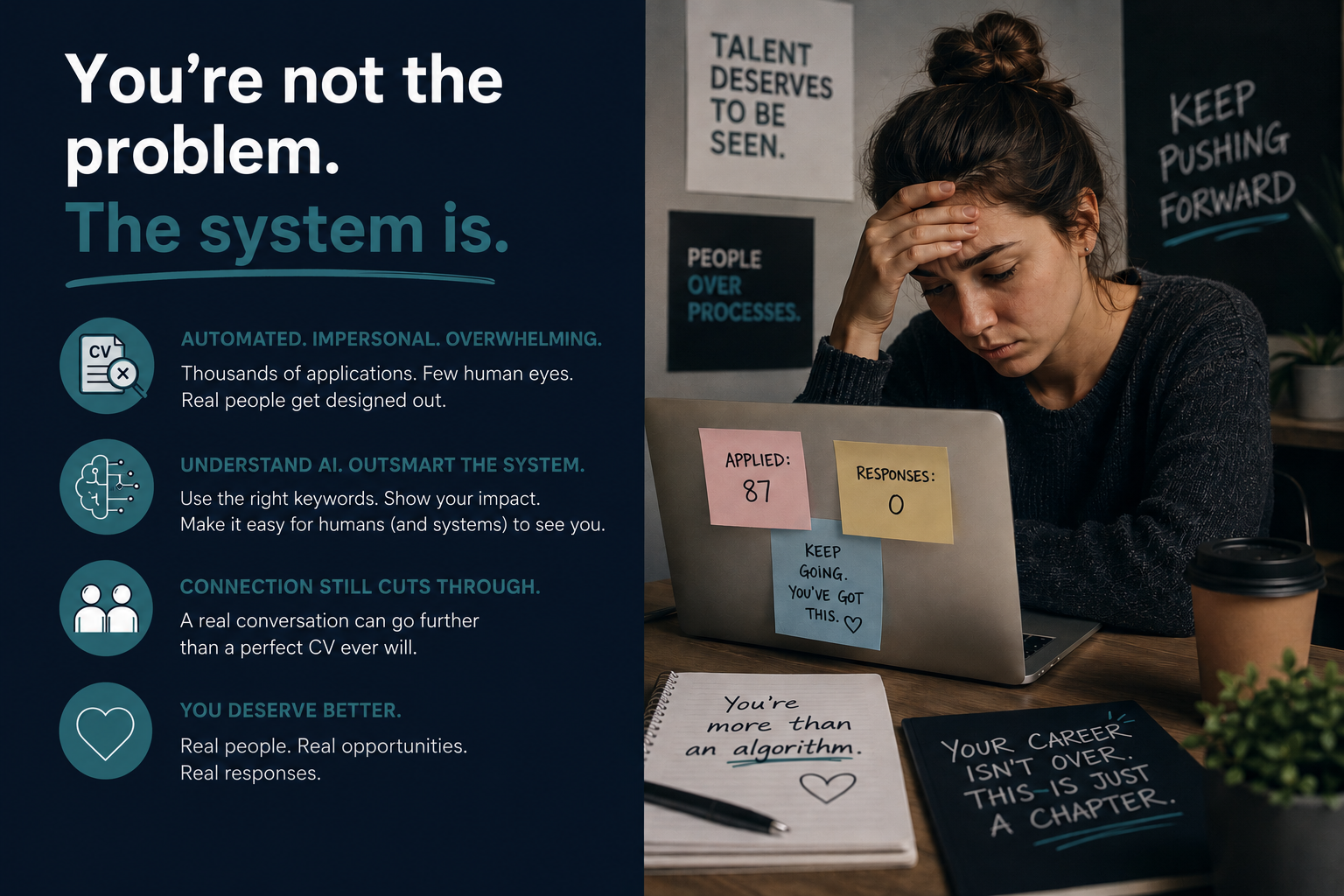
You grinded through bootcamp, shipped a portfolio of side projects that would ace any interview, networked like a pro on LinkedIn, fired off hundreds of applications—then… radio silence. Ghosted. “We’re going with someone more senior.”
In March 2026, that isn’t just your bad run; it’s the meta for entry-level developers.
The stats are brutal:
Employment for software developers aged 22–25 in high-AI-exposure fields: down nearly 20% from late-2022 peak (Stanford Digital Economy Lab, Nov 2025 report).
Big Tech new-grad hires: crashed from ~32% of new roles pre-pandemic to just 7% today (SignalFire/Forbes data).
Entry-level/junior (P1/P2) hiring rates: plunged 50–73% in recent periods (Ravio, SignalFire reports).
Yet the overall market isn’t shrinking—the U.S. Bureau of Labor Statistics projects software developer jobs to grow 15% from 2024–2034, much faster than average, with ~129,000 openings yearly. Demand surges as every industry levels up with AI.
So what broke the ladder? AI didn’t nerf software jobs. It patched out the tutorial mode.
Tools like Cursor, Claude Code, Lovable, and agentic workflows now auto-complete the grind: boilerplate factories, bug-squashing side quests, test suite generators, even basic feature implementation from high-level prompts. A senior developer directing a squad of agents can clear what used to take a full party of juniors and mids—faster, cheaper, and with no onboarding downtime.
Teams flatten. Mentoring guilds disband. Companies run the math: why invest XP in training juniors when AI delivers endgame output with zero grind?
The classic progression path—spawn as junior, farm simple features for levels, hit mid, then senior—is glitched for most. Entry gates are being locked while high-level roles (AI orchestration, system architecture, etc.) multiply and pay out big.
But respawn is possible. The winners aren’t raging at the patch; they’re mastering the new mechanics.
2026 Pivot Playbook: Level Up or Get Carried
Become the AI Orchestrator: Master prompting at scale, tool chaining, output evaluation/debugging, and building reliable agent squads. Companies crave players who turn agents into force multipliers.
Own the Endgame Layers (human-only mechanics): Craft razor-sharp specs, call architectural trades, wrangle integration chaos, assess risks, and sync with business objectives. Build highlight reels showing full clears: problem framing → spec → agent execution → validation + iteration loops.
Queue for High-Growth Niches (hot lanes): AI/ML engineering, agent infrastructure, eval systems, cloud architecture, AI cybersecurity, and DevOps for agentic pipelines—roles where context, accountability, and judgment still carry weight.
Prove Impact Day One (show, don’t tell): Contribute to open-source AI repos, deploy personal agent-powered tools, and snag gigs heavy on hybrid workflows. In applicant floods, raw AI-assisted shipping rises to the top.
Organizations get the same ultimatum: hoard seniors and risk a talent drought in 5–7 years, or redesign entry points around AI collab—oversight, spec crafting, validation, and agent governance training. Top teams are already queuing this way.
The old ladder glitched out. The new one is steeper, but the horizon stretches wider.
Fluency in commanding AI agents + Irreplaceable human judgment + Constant proof of value = The winning build.
At TYP Group, we coach players and teams through the patch—helping talent and clients understand how to position and pivot effectively in a constantly evolving market. Whether you are a professional looking for a chance to grab onto the first rung, or a business leader aiming to streamline without compromising your succession planning, we can offer practical solutions and guidance from our industry experts.